Swimwear for No-Op and Pre-Op Trans Women: A Complete Guide
Finding the right swimsuit can be an important part of feeling comfortable and confident at the beach or pool. For pre-op and no-op trans women, swimwear can present some additional considerations because most conventional women’s swimsuits are designed around bodies without external genitalia.
Fortunately, there is no single way a trans woman needs to look in a swimsuit.
Some women want the smoothest, flattest possible front. Some prefer a naturally feminine contour without being completely flat. Others don’t want to tuck at all. Some are comfortable with a visible bulge and simply want a beautiful swimsuit that fits properly.
Modern swimwear can accommodate all of these preferences.
The goal should not be conforming to one definition of a female body. It should be finding a swimsuit that allows you to swim, relax, move, and enjoy yourself while presenting your body the way you want it presented.
What Do “Pre-Op” and “No-Op” Mean?
“Pre-op” generally describes a transgender person who is considering or planning gender-affirming surgery but has not yet undergone it.
“No-op” is sometimes used for someone who does not plan to pursue genital surgery.
Not every transgender person uses these terms, and surgery is not what determines whether someone is a woman. They are simply useful terms in a swimwear discussion because someone with external genitalia may need different garment construction than someone who has undergone genital surgery.
This creates an important category of specialized swimwear.
What Does a Trans Woman Want From Her Swimsuit?
Before shopping for a particular style, decide what you want the swimsuit to accomplish.
Possible priorities include:
- creating a smooth or flatter front;
- securely supporting a tuck;
- minimizing genital definition without tucking;
- creating a softer feminine contour;
- wearing a conventional women’s bikini with additional support underneath;
- providing secure coverage for swimming;
- creating a feminine silhouette through high-cut legs or hip-enhancing proportions;
- or simply wearing a swimsuit you love without trying to conceal your anatomy.
None of these goals is more legitimate than another.
Once you know the presentation you want, selecting the right construction becomes much easier.
The Smooth-Front Look
A smooth front is one of the most commonly requested features in transgender swimwear.
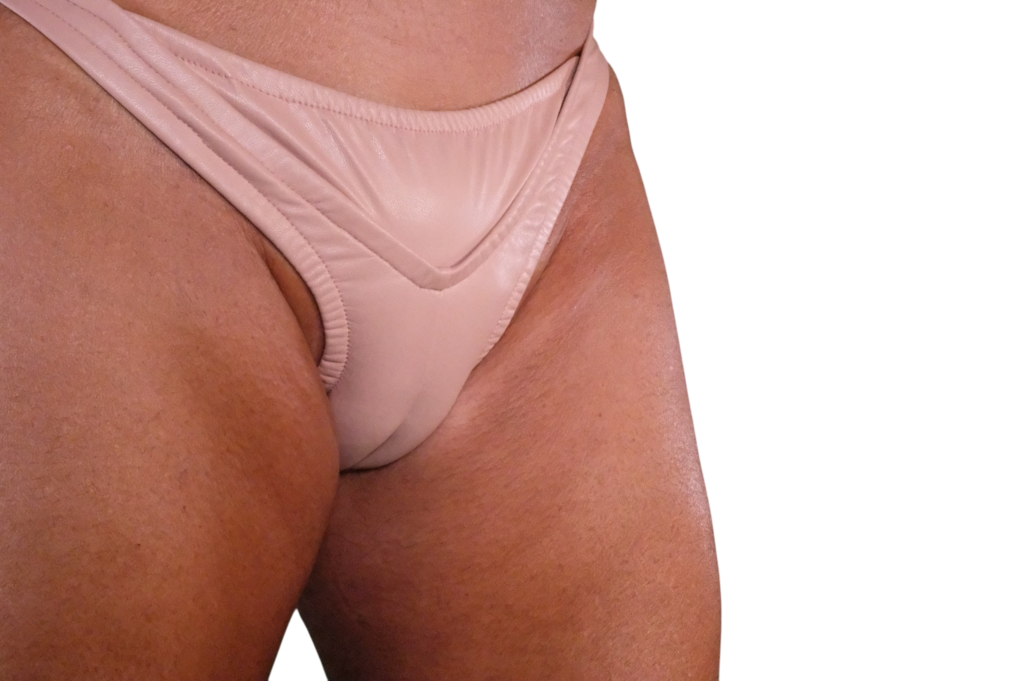
This appearance can be achieved through several approaches, including compression garments, specially constructed bikini bottoms, tucking swimwear, gaff-style swimwear, and layered systems.
The objective is usually to reduce obvious genital definition underneath the swimsuit.
The best designs accomplish this without requiring excessive pressure.
More compression is not automatically better. A swimsuit should be secure, but significant pain, numbness, skin discoloration, or persistent discomfort are signs to stop and readjust or change garments.
A day at the beach should not require suffering for the sake of appearance.
Tucking Swimwear
Tucking is one option for creating a flatter front silhouette.
A traditional tuck generally involves positioning the penis backward between the legs and arranging the surrounding tissue so that the front becomes smoother. A compression garment or specialized swimsuit then helps maintain the position.
Some people tuck regularly and become very comfortable doing it. Others find it uncomfortable or simply don’t want to.
Both choices are valid.
Swimwear designed specifically for tucking can make the process easier because the garment itself provides strategically placed compression and support. This can eliminate the need to wear ordinary underwear underneath a swimsuit.
For swimming, security is especially important. Running, diving, waves, sitting, and getting in and out of the water all place different stresses on the garment.
A good tucking swimsuit therefore needs to be more than visually flattering. It needs to remain secure while moving.
Tucking Without Tape
Many people prefer tapeless tucking for swimming.
A properly sized compression bikini, gaff-style bottom, or dedicated tucking swimsuit can hold everything in position without adhesive.
This has obvious practical advantages.
There is nothing to remove from sensitive skin afterward, and adjustments can be easier. It also avoids some of the difficulties associated with adhesives becoming unreliable around water, sweat, sunscreen, and repeated movement.
For many everyday beach situations, a well-designed tapeless system provides a useful balance between appearance and practicality.
What About Tape?
Some trans women use skin-safe body tape as part of a tuck, but swimming makes adhesive methods more complicated.
Water resistance, skin sensitivity, removal, sunscreen, sweat, and repeated movement all matter. Products not specifically intended for prolonged skin contact should not be improvised for this purpose.
Never tape in a way that makes urination impossible for long periods, and avoid excessive tension or pressure.
For someone new to tucking, a dedicated compression garment is generally a simpler place to begin than experimenting with aggressive taping techniques.
Non-Tucking Swimwear
Tucking isn’t mandatory.
This is one of the most important developments in transgender swimwear.
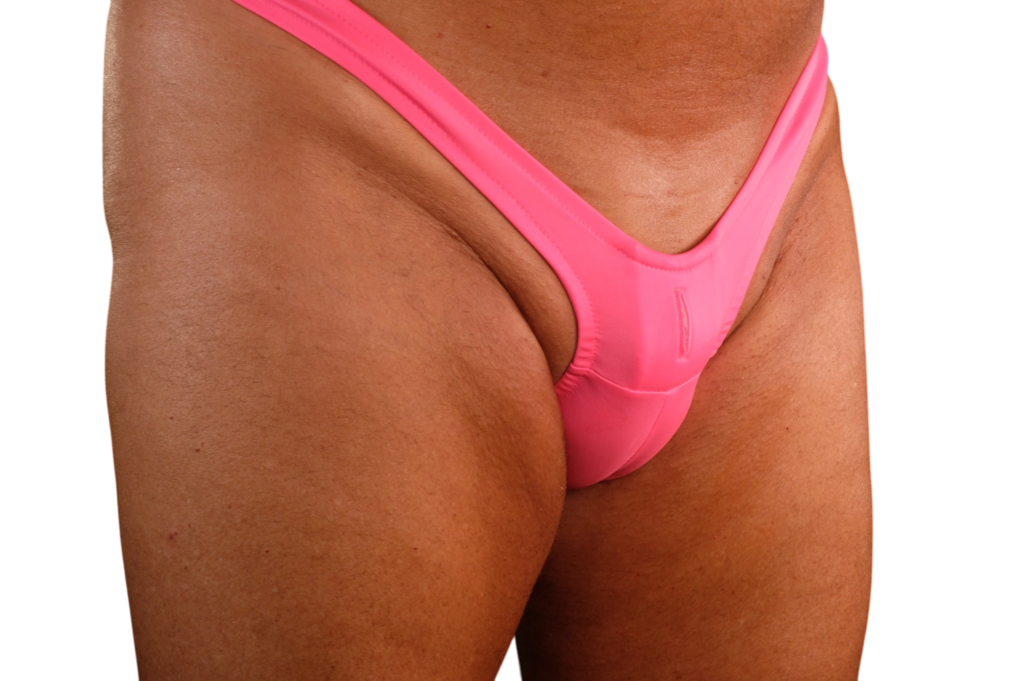
Some designs use compression and strategically shaped panels to reduce genital definition without requiring a traditional tuck. The result may not be completely flat, but it can create a smoother and less conspicuous front.
For many women, this is the ideal compromise.
It can mean less manipulation, less pressure, and easier bathroom access while still producing a silhouette that feels feminine.
A non-tucking approach can also be particularly useful for long beach days when comfort is a higher priority than maximum flattening.
Feminine Contouring Doesn’t Have to Mean Completely Flat
There is sometimes an assumption that transgender swimwear should make the front absolutely flat.
That isn’t necessarily true.
Bodies have contours.
Some trans women prefer a softly rounded front rather than trying to eliminate every trace of anatomy. Others enjoy swimsuit designs that visually suggest feminine anatomy through seams, shaping, or fabric construction.
The important distinction is between creating a visual silhouette and actually altering the body.
A swimsuit can change how the body appears without changing the anatomy underneath it.
Bikini Bottoms for Trans Women
The bikini is an especially versatile choice.
Higher-rise bikini bottoms can provide substantial support and compression while also emphasizing the waist. Lower-rise designs can create a youthful, minimal beach look but generally leave less fabric available for secure compression.
Wide-front bikini bottoms tend to offer more security.
Narrow micro bikinis require much more precise fit.
High-cut legs can visually lengthen the legs and may help create a traditionally feminine silhouette.
Side-tie bikinis can be attractive, but they don’t necessarily provide the same secure compression as fixed-side garments.
For someone who intends to swim actively rather than simply sunbathe, security deserves extra consideration.
One-Piece Swimsuits
The one-piece swimsuit is sometimes overlooked in discussions of transgender swimwear, but it can be an excellent option.
A one-piece creates a continuous visual line from the torso through the hips and can provide considerably more overall support than a tiny bikini.
Some designs incorporate compression panels through the lower abdomen and front. Others use ruching, patterns, skirts, or structural seams that reduce visual emphasis on the crotch.
One-piece swimsuits can also emphasize other parts of the body.
A plunging neckline draws attention upward. High-cut legs visually lengthen the lower body. Strategic waist shaping can produce stronger curves.
Swimwear styling isn’t only about hiding something. It can also be about directing attention toward the features you love.
Swim Skirts and Skirted Bottoms
A swim skirt provides another easy option for people who don’t want to think constantly about front presentation.
These garments combine a conventional swimsuit bottom with an attached or overlapping skirt.
The additional fabric can reduce visibility from the front while creating a distinctly feminine beachwear silhouette.
For someone early in transition or simply nervous about appearing in swimwear publicly, this additional coverage can provide significant confidence without requiring extreme compression.
Board Shorts Are an Option Too
Being a trans woman doesn’t mean you have to wear a bikini.
Women’s board shorts, swim shorts, and fitted swim shorts can be fashionable and practical.
Some women alternate according to the situation.
A bikini might be perfect for a resort vacation, while shorts might feel better for surfing, kayaking, or a crowded family beach.
Transition should increase your wardrobe choices, not replace one restrictive set of fashion rules with another.
Micro Bikinis and Minimal Swimwear
Some trans women love extremely small swimsuits.
There is no reason they shouldn’t.
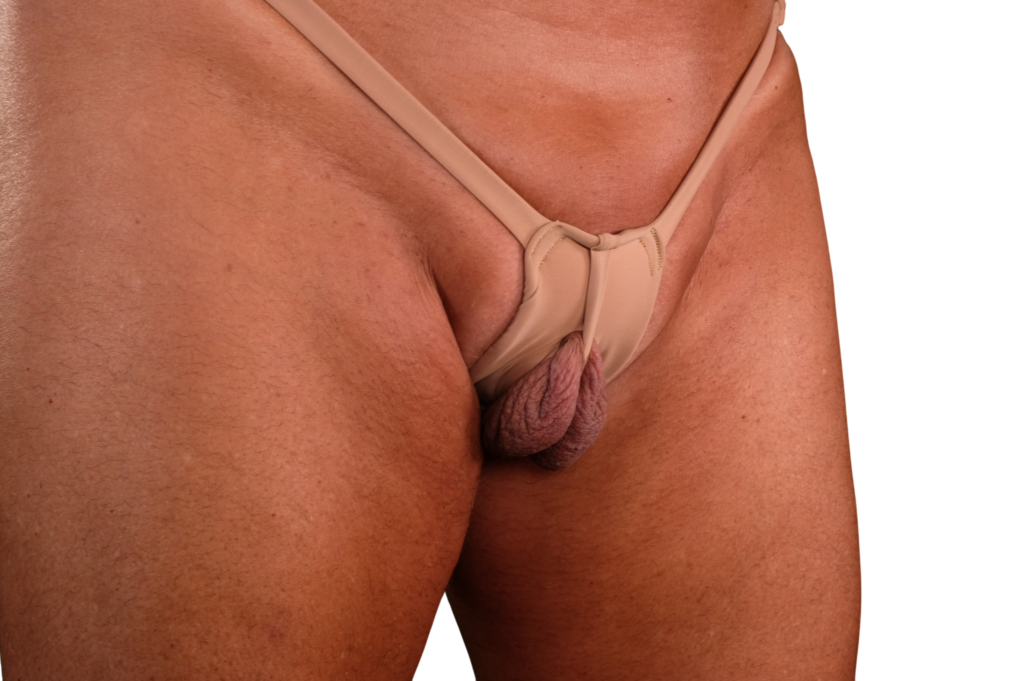
Micro bikinis, thong bikinis, Brazilian bottoms, and other minimal styles can all potentially work for pre-op and no-op bodies, but fit becomes increasingly important as coverage decreases.
A tiny garment has less material available to provide compression and security.
Specialized designs can address this with reinforced fronts, stretch panels, internal support, or carefully engineered proportions.
Before wearing an extremely minimal design publicly, test it while walking, sitting, bending, and swimming.
A swimsuit should remain secure throughout normal movement.
Thong Swimwear
Thong swimwear can create an especially feminine silhouette because it exposes the buttocks and visually emphasizes the hips.
For trans women, the challenge is that reducing rear and side coverage can also reduce the amount of material available to support the front.
Dedicated trans-friendly thong designs may therefore use stronger front construction than an ordinary women’s fashion thong.
Sizing is critical.
Too loose and the garment may not hold everything securely. Too tight and excessive compression can become uncomfortable.
Gender-Affirming Swimwear Without Concealment
Another option deserves equal attention: not hiding anything.
Some trans women are comfortable wearing women’s swimwear with a visible genital outline or bulge.
That doesn’t make the swimsuit less feminine.
A transgender woman’s body is a woman’s body regardless of whether she has undergone genital surgery.
For people comfortable with this presentation, the main issue becomes finding women’s swimwear with enough front room to provide secure coverage.
Stretchy fabrics and wider-front bikini bottoms can often work well.
Creating a More Feminine Overall Silhouette
The front of the swimsuit is only one part of the picture.
Swimwear can visually alter overall proportions through cut, color, and placement.
High-cut legs can make the legs appear longer.
A high waist can emphasize the waist-to-hip transition.
Ruffles and side details can visually add width around the hips.
A plunging or detailed neckline can direct attention toward the upper body.
Patterns can change perceived proportions.
The most flattering swimsuit may therefore be the one that balances the entire body rather than simply providing maximum compression in one area.
Fabric Matters
Good stretch is particularly important for gender-affirming swimwear.
The material needs to stretch enough to accommodate the body while possessing sufficient recovery to maintain support after repeated movement.
A swimsuit that becomes loose after getting wet won’t provide reliable compression.
Opacity matters too.
Some fabrics—particularly very light colors—can become noticeably more transparent when wet. Before wearing a new swimsuit publicly, checking it wet under bright lighting is worthwhile.
Finding the Right Size
Don’t automatically size down because you want more compression.
A smaller swimsuit isn’t necessarily a better tucking swimsuit.
Excessively small garments can create uncomfortable pressure, digging waistbands, unwanted displacement, and inadequate coverage.
Instead, look for a garment specifically designed to provide the desired level of compression in your correct size.
The engineering of the swimsuit should create the silhouette—not pain.
Test Your Swimsuit Before the Beach
A new swimsuit deserves a trial run.
Wear it around the house.
Walk.
Sit.
Squat.
Bend over.
Move your legs apart.
If possible, get it wet.
Check the swimsuit from several angles and make sure it remains positioned securely.
If you’re using a tuck, make sure normal movement doesn’t create painful pressure.
This simple test can dramatically increase confidence when you eventually wear the swimsuit publicly.
Don’t Sacrifice Safety for Flatness
Gender affirmation can make a smooth silhouette emotionally important, but physical safety still comes first.
Tucking or compression should not produce significant pain, numbness, tingling, persistent discoloration, skin injury, or difficulty urinating.
If something hurts, stop.
Give your body breaks during extended periods of compression, particularly when you’re still learning what is comfortable for you.
The goal is sustainable comfort and confidence—not achieving the flattest possible appearance at any cost.
Your First Beach Day
The first public swimsuit experience can feel significant.
You may have spent months experimenting privately with clothing and suddenly find yourself standing in front of a mirror wearing a bikini before heading to the beach.
Give yourself permission to start conservatively if that makes the experience easier.
A one-piece swimsuit or higher-coverage bikini can be the first step. A cover-up, wrap, shorts, or beach dress can provide another layer whenever you want it.
As your confidence develops, you may discover that you want smaller bikinis, Brazilian cuts, thongs, or micro swimwear.
Or you may discover that you love your original one-piece.
There is no required progression.
There Is No Single Correct Transgender Swimsuit
The most important principle in choosing swimwear for no-op and pre-op trans women is that there is no single correct way to present a transgender body.
You can tuck.
You can use compression without tucking.
You can choose a swimsuit that creates a smooth feminine silhouette.
You can wear a conventional bikini and allow your natural anatomy to remain visible.
You can wear a one-piece, bikini, thong, swim skirt, shorts, or micro swimsuit.
Your surgical plans—or decision not to have surgery—do not determine whether you deserve to enjoy the beach as yourself.
Finding the Swimsuit That Feels Like You
The best gender-affirming swimwear accomplishes something deeper than simply covering the body.
It helps the outside presentation feel closer to the way the wearer wants to be seen.
For one pre-op woman, that may mean a securely tucked bikini with a very smooth front.
For a no-op woman, it might mean a comfortable compression bottom that softens the outline without requiring a tuck.
Another woman may proudly wear a conventional bikini without attempting to conceal her anatomy at all.
All three approaches can be valid.
Today’s expanding range of transgender, gender-fluid, and gender-affirming swimwear means that no-op and pre-op trans women have more opportunities to choose the presentation that works for them.
Ultimately, that’s what good swimwear should provide:
security when you need it, comfort throughout the day, a style you love, and enough confidence to stop thinking about the swimsuit and start enjoying the beach.